Hardware and home improvement
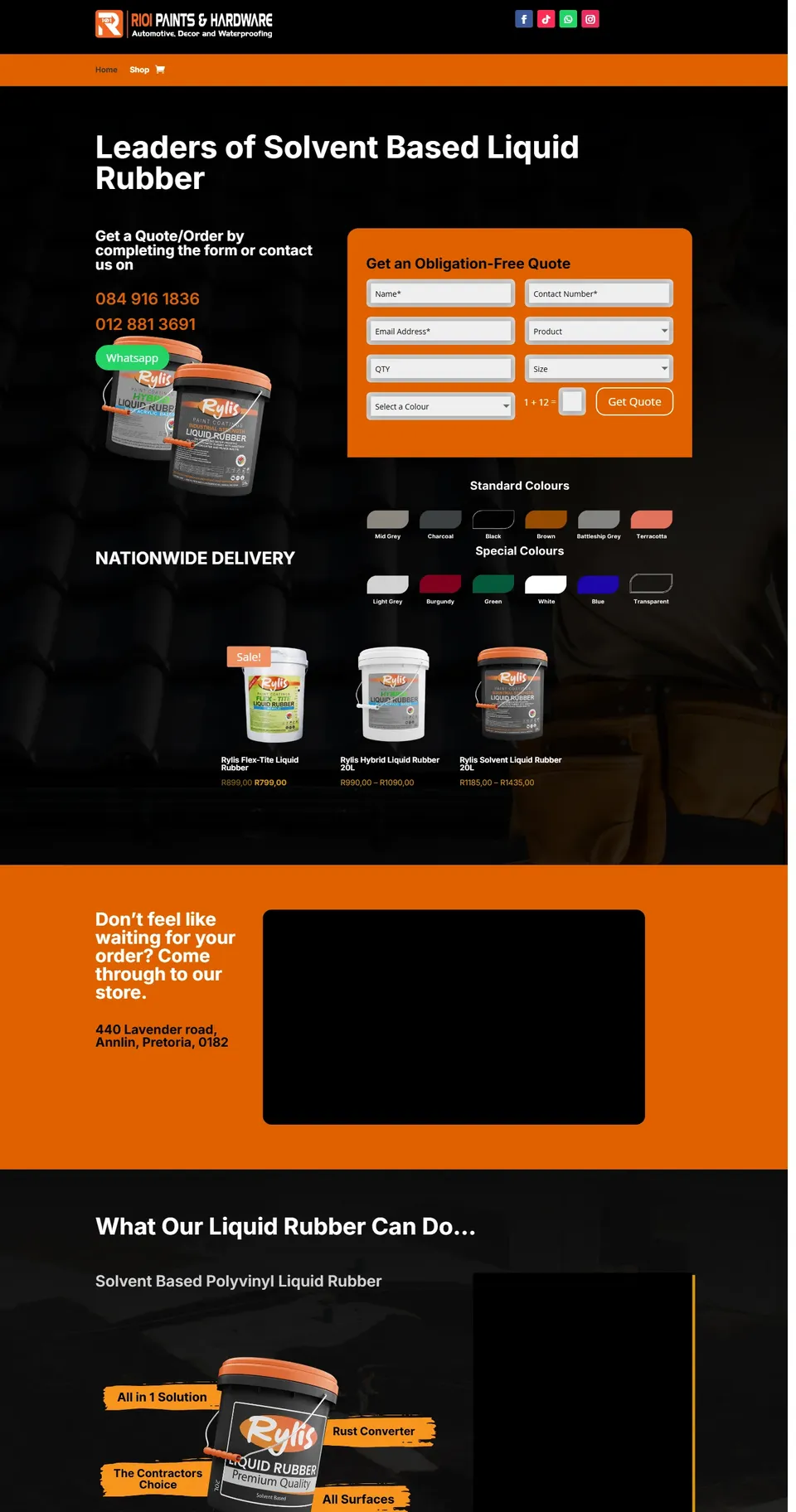
The question: “How do I fix rising damp on an inside wall?”
The ad: a hardware store in Pretoria East shows its damp-proofing range and offers advice in store.
New service · South Africa
Advertising inside ChatGPT lets eligible businesses appear next to the conversations people have while they research, compare options and decide what to buy. I’ll help you understand it, check whether it suits your business, and plan, set up and manage campaigns where your account allows it.
ChatGPT advertising is a new paid channel that is still changing, and it is still rolling out in South Africa. Facts on this page were last checked on . MJDesigns is an independent studio and is not an OpenAI partner.
What’s the best way to waterproof a flat concrete roof before the summer rains?
ChatGPT Ads is a paid advertising channel inside ChatGPT. Eligible businesses can show short, clearly labelled ads to people while they explore ideas, research a problem or compare products and services.
The ad appears below ChatGPT’s answer, separate from it, and is marked as sponsored. OpenAI says ads do not influence what ChatGPT says, so you can’t pay to be recommended in the answer itself.
Think of it as being present at the moment someone is working out what to buy. If your product or service is relevant to that conversation, your ad can introduce your business and send the person to your website.
Advertisers use OpenAI’s Ads Manager, which is still labelled beta, to create campaigns, set a budget and see results. It is new, it is changing quickly, and nobody has years of South African data on it yet. That is exactly why it is worth understanding before you spend money on it.
From someone’s question to your landing page, in six steps.
They use ChatGPT to research a topic, explore options or solve a problem, for example choosing a roof sealant or planning a weekend away.
The ad system looks at the topic of the conversation and the information advertisers have given about their business, and decides whether any eligible ad fits.
If one fits, a sponsored ad can appear below ChatGPT’s answer. The answer itself is written without regard to ads.
They can ignore the ad or tap it. Nobody is forced to engage, so the ad has to be genuinely useful.
The ad sends them to your website or a landing page that matches the ad, where they can enquire, WhatsApp you or buy.
Ads Manager reports views, clicks and conversions where tracking is set up. You adjust the ad, the page and the budget based on what you learn.
Worth knowing: an ad will not appear in every conversation, and placement is never guaranteed. Buying ads does not get your business mentioned or recommended in ChatGPT’s answers.
These three often get lumped together. They are separate jobs, and none of them replaces the others.
What OpenAI has published, and what is still unclear. Checked .
Categories OpenAI lists as acceptable include household and lifestyle products, local services, travel, digital products and education. Policies change, so I check them again for your business.
Not because every business must jump in now. These are possible benefits, and they will not apply to everyone.
Hypothetical examples to show how it could work. These are not real campaigns or results.
The question: “How do I fix rising damp on an inside wall?”
The ad: a hardware store in Pretoria East shows its damp-proofing range and offers advice in store.
The question: “Which camping fridge is best for a week in the Kruger?”
The ad: an online outdoor store links to a page comparing its fridges, with delivery times to Gauteng.
The question: “Ideas for a quiet weekend near Hartbeespoort Dam?”
The ad: a guesthouse promotes its midweek special and links straight to bookings.
The question: “How can I get better at Excel for my job?”
The ad: a South African training company introduces its short online Excel course.
The question: “What should I check before replacing my geyser?”
The ad: a plumbing company in Centurion offers a free quote and links to its booking page.
Financial, medical, legal, gambling, alcohol, property rental and similar businesses face restrictions or can’t advertise at all under OpenAI’s current policy outside the US. I’ll tell you upfront if that applies to you.
No channel is best for everyone. The right one depends on your business, your customers and your goals.
| Platform | Where ads appear | How people discover you | Possible strengths | Important limitations |
|---|---|---|---|---|
| ChatGPT Ads | Below ChatGPT’s answers, for adult users on the Free and Go plans in supported countries. | While they research, compare or plan in a conversation. The ad is matched to the topic. | Reaches people mid-research. Ads sit next to a relevant conversation and can explain an offer to someone actively weighing options. | New and still changing. South African access is still rolling out, many industries are excluded, paid-plan users see no ads, and there is little local performance data. |
| Google Search Ads | Google search results, and partner sites if you choose them. | They search for something specific, like “plumber Centurion”, and see your ad. | Very strong when people already know what they need. Mature keyword and location targeting, and years of South African data. | Popular keywords can be expensive. It mostly reaches people who are already searching, not those still exploring. |
| Meta Ads | Facebook, Instagram and Meta’s other apps. | They scroll their feed or stories and your ad catches their eye. | Great for visual products and video, detailed audience and location targeting, and ads that open a WhatsApp chat. | People aren’t necessarily looking to buy. Creative wears out quickly and needs regular refreshing. |
I also run Meta and Google ad campaigns, so a test can be compared fairly against what you already use.
Help from first question to running campaign. Campaign setup and management depend on your account being eligible, the access Ads Manager allows, and OpenAI’s policies.
Five stages. You’ll know what is happening at each one.
We talk about your business, customers, offer and goals, and I look at your website and current advertising.
I check your industry against OpenAI’s ad policies, whether your country and business are supported, and whether your website and tracking are ready.
We agree on the offer, budget and test plan. I write the ads and build or improve the landing page.
Ads go live once your account is set up and OpenAI has approved the ads. Approval is OpenAI’s decision.
I watch the numbers, improve what isn’t working and send you plain-language reports.
Every business is different, so I quote after the assessment. Your costs are split into three parts, and you’ll always see them separately.
For the assessment, strategy, setup, ads and ongoing management. Quoted as a once-off project or a monthly fee, agreed before any work starts.
What you pay for the ads themselves, billed by OpenAI to your own card in Ads Manager. You set the budget. It is not part of my fee, and I never mark it up.
New landing pages, website changes, design, video or tracking setup, quoted separately so you know exactly what you’re paying for.
OpenAI hasn’t published a fixed price list for South Africa. Ads are bought in an auction, so the cost per view or click varies, and I won’t quote a number I can’t back up.
Website and Meta ad clients. These are not ChatGPT Ads campaigns.
It is a paid advertising channel inside ChatGPT. Eligible businesses can show short, clearly labelled ads below ChatGPT’s answers to people researching a relevant topic. A tap on the ad takes the person to the business’s website. The ads are kept separate from the answers.
It is rolling out. On 21 and 22 October 2026, South African news outlets reported that OpenAI is extending ChatGPT ads and self-serve Ads Manager to 26 more countries, including South Africa. When I checked on 25 October 2026, OpenAI’s own Ads Manager availability page did not yet list South Africa. Rollouts like this usually happen in phases, and eligibility also depends on where your business is registered, your industry and OpenAI’s review. I check this for your specific business before you spend anything.
Advertisers sign up for OpenAI’s Ads Manager (currently in beta) at ads.openai.com, where it is available. You enter your business details, add a payment card and create a campaign: choose an objective, set a budget, and build the ad with your business name, logo, headline, description, image and landing page. OpenAI then reviews the ad before it runs. If you prefer, I can help you through each step, or request an assessment first.
No. OpenAI’s ad policies exclude several categories. Outside the US, financial, health and legal services can’t advertise. Gambling, alcohol, tobacco, drugs, adult content, dating, job listings, housing sales and rentals, and political ads are also not allowed. OpenAI reviews advertisers, ads and landing pages, and can decline any of them. Categories such as household and lifestyle products, local services, travel, digital products and education are generally acceptable.
You set your own budget in Ads Manager. Depending on the campaign objective, you pay per thousand views or per click, and prices are set in an auction, so they vary with demand and relevance. OpenAI has not published a fixed price list for South Africa, and there is no reliable local cost data yet. My fees for strategy, setup and management are separate from your ad spend and are quoted upfront.
I could not confirm an official minimum for South African accounts as of 25 October 2026. Some reports mention a daily minimum for US-dollar accounts, but OpenAI has not published one for rand accounts that I could verify. I’ll confirm the actual limits in Ads Manager when your account is set up.
It can send people who are researching a relevant topic to your website. Whether they become leads or sales depends on your offer, your landing page, your prices and how quickly you follow up. It is a new channel with little South African data, so nobody can honestly guarantee results. I recommend a measured test with clear tracking before committing a larger budget.
The system looks at what the conversation is about and the information advertisers have provided, then picks from eligible ads in an auction that considers relevance as well as the bid. If an ad is shown, it appears below ChatGPT’s answer and is labelled as sponsored. Many conversations show no ad at all, and ads are not shown near health, mental health or political topics, or to users under 18.
Ads are matched mainly to the context of the conversation, not to detailed personal profiles, and advertisers never get access to people’s chats. Which location and audience settings are available depends on what Ads Manager offers for your account and country. I confirm the options during setup rather than promise targeting that may not exist yet.
For most businesses, no. Google Search Ads reach people already searching for what you sell, and Meta Ads are strong for visual products and building awareness. ChatGPT Ads add another opportunity to reach people while they research. The sensible approach is to test it alongside what already works and compare the cost per enquiry or sale.
No. OpenAI says ads do not influence ChatGPT’s answers. Ads appear separately and are labelled. Paying for ads can’t get your business recommended or mentioned in the answer itself.
No. According to OpenAI, advertisers only receive combined performance information such as how many people saw or clicked an ad. They don’t see conversations, chat history or personal details. Users also have controls over the ads they see.
Yes. Every ad needs a landing page, and OpenAI reviews landing pages as part of approval. The page should load fast on a phone, match the promise in the ad and make it easy to enquire, WhatsApp or buy. I can build or improve that page for you.
Yes, where your business is eligible and Ads Manager allows me access to help manage your account. The account and billing stay in your business’s name, so you keep control. MJDesigns is an independent studio, not an OpenAI partner or certified agency, and I’ll be clear about what the platform does and doesn’t allow at each step.
Ads can start showing once your account is set up and OpenAI has approved them. The system then needs time and data to learn. I suggest planning a test period of at least four to six weeks before judging a campaign, and longer for low budgets or high-value products with longer buying decisions.
Ads Manager reports views, clicks and, if tracking is set up, conversions. OpenAI offers a measurement pixel and a Conversions API for this. I also add tracking tags so visits show up in Google Analytics, and track enquiries, WhatsApp clicks and sales. The real test is your cost per enquiry or sale compared with your other channels.
I’ll tell you straight and explain why, whether it is your country, your industry or something on your website. Often the best move is to get your landing page, tracking and offer ready while focusing on Google or Meta, then check again as OpenAI expands availability and updates its policies.
They can be. Ads Manager is self-serve and you set your own budget. But small budgets mean the system learns more slowly, and results are not guaranteed. It suits businesses whose customers research before they buy, whose industry is allowed, and who have a solid landing page. The assessment is there to help you decide.
Tell me about your business and what you want to achieve. I’ll reply within a day with honest feedback on whether ChatGPT Ads makes sense for you, and what I’d do next.
Or email michael@mjdesigns.co.za
I’ll read it and reply by email within a day. If it’s urgent, WhatsApp me on 068 782 7410.